
Greenland is Not For Sale
By Tyrone Chuan
The 2026 Greenland crisis gets told as a Trump story but that is only half true. The January escalation came from the White House and the tariff threats were his. The other half is much more historical, and will outlast him.
About 56,000 people live on an island that holds rare earth reserves and straddles the GIUK Gap, the water Russian submarines must cross to reach the Atlantic. Under the 2009 Self-Government Act they run their own domestic affairs while Denmark keeps defence and foreign policy. Every government with an Arctic stake wants something from that split, and no two of them want the same thing. The argument stopped being about who owns Greenland some time ago. It is about who gets to use it, and at what price. That is the question facing General Assembly 4 of Thimun Singapore 2026.
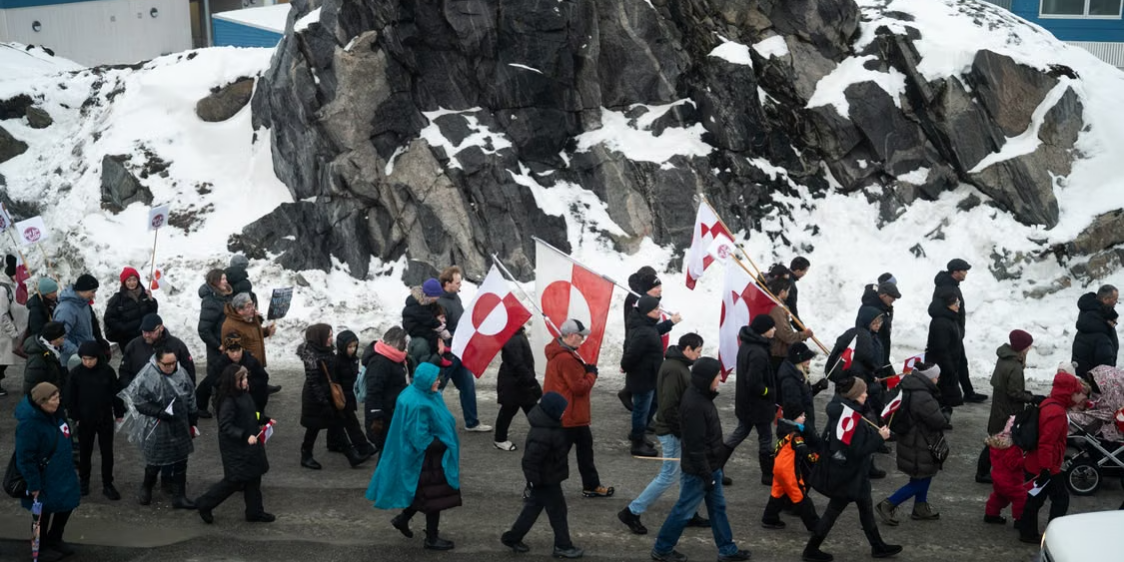
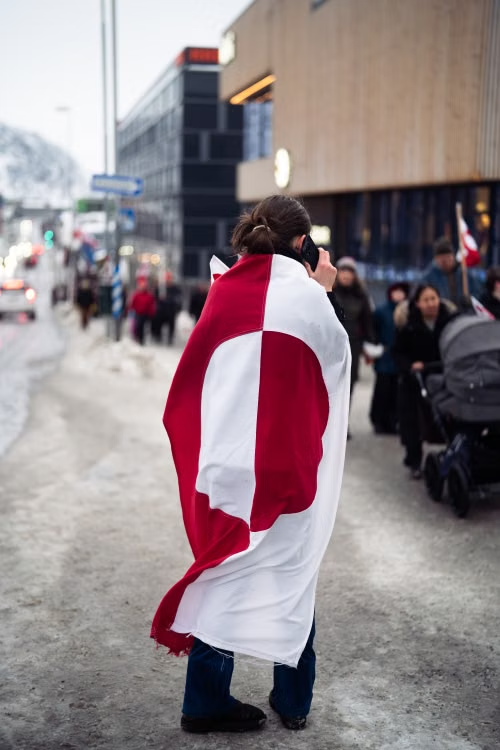
In January 2026, Trump renewed the push to bring Greenland under American control and threatened tariffs of up to 25 percent on Denmark and seven other NATO members unless a deal was reached. Roughly a quarter of Nuuk marched under the slogan “Greenland is not for sale.” European governments and a panel of UN human rights experts said a forced change of status would violate the UN Charter.
By September, the pressure had changed shape rather than lifted. The United States, Denmark, and Greenland reached a trilateral arrangement that widened American military access and left Danish sovereignty intact. Military cooperation replaced ownership as the center of the negotiation, and Denmark sent more soldiers north. The EU signed a €200 million partnership covering connectivity, clean energy, and critical minerals. The crisis quietened without being settled. What changed was the instrument, not the disagreement.
Self-determination is the answer every party endorses and none of them can use. The 2009 Act recognises Greenlanders as a people with that right and sets the route any change of status has to take. It begins with An agreement between Nuuk and Copenhagen, followed by a referendum in Greenland, then endorsement by Inatsisartut, ending with consent from the Folketing. On paper, the route is open. In practice it runs into four positions that cannot all be satisfied at once.
Greenland’s government wants closer ties to the EU and Canada to dilute its dependence on Copenhagen. The block grant from Denmark supplies about half of government revenue and fisheries supply more than 90 percent of exports, which leaves the island independent in law and dependent in budget. Denmark wants to keep sovereignty, keep NATO intact, and keep Arctic Defence credible, commitments that pull apart when Washington applies pressure. The United States wants the GIUK Gap watched and rare earth supply secured, and has shown it will use tariffs to get both. The EU wants critical minerals that do not pass through China. NATO is left managing a dispute between two of its own members over territory that belongs to one of them.
While all of these positions are defensible on their own. They can’t all be satisfied due to three primary structural obstacles.
The first is the legal foundation. Greenland moved from colony to county of Denmark in 1953, and the General Assembly accepted the change in Resolution 849 (IX) without a referendum in Greenland. The objection that followed, then and since, is that a status change nobody voted on cannot be an exercise of self-determination, whatever the Assembly recorded. Denmark answers that sovereignty is settled, that the 2009 Act is itself an act of self-determination, and that the Act provides the only lawful route to anything further. That answer is respectable and it does not close the point. A settlement resting on a contested premise stays reversible for as long as the contest lasts.
The second is money. Self-determination that depends on a transfer from the state you are leaving is self-determination in name. Half of Greenland’s public revenue arrives from Copenhagen, and the replacement would have to come from mining, which the island’s own government wants to regulate and much of its population distrusts. Independence is legally available and fiscally remote, and every party at the table knows which of those two facts governs.
The third is that the security interest has nowhere to be argued. Russian rebuilding on the Kola Peninsula and Chinese interest in Arctic shipping are real, and so is the American reading of them. The difficulty is procedural. There is no forum where the United States can press a defence requirement on Denmark without one ally coercing another, and no forum where Greenland can adjudicate between the two. NATO cannot arbitrate a dispute between members. The UN cannot enforce a status the parties do not accept. The EU can send money and cannot send sovereignty. Unilateral pressure fills the gap because nothing else was built to.
The September arrangement didn’t fix the issue, it relocated it. Access and funding replaced ownership as the instruments of influence, and both now run through institutions rather than through threats. The legal foundation is still contested, the budget still comes from Copenhagen, and the defence requirement still has no forum. Whether the peace maintains depends on whether the new arrangements deliver enough to each side to keep the argument inside diplomatic channels, just as the delegates of GA4 experienced this week at THIMUN Singapore 2026.